
Free Dental Implants for Recovering Addicts: Grants, Programs and the Turkey Alternative (2026)
If you searched for “free dental implants for recovering addicts near me”, you already know two things: your teeth are holding you back, and the quotes you have seen are impossible. This guide gives you the honest picture. Truly free implants exist, but they are rare and have waiting lists. What does exist is a set of realistic routes that bring the cost down from $30,000 or more to a figure a person rebuilding their life can actually reach.
Below you will find every program worth applying to in the United States and Canada, what each one really covers, how to spot fake “implant grants”, and a full cost comparison with treatment at CLINIQUEPLUS in Istanbul, where many people in recovery now pay less for a full arch of fixed teeth than a single implant costs at home. If you want the medical side first (sobriety timing, non-opioid protocols, success rates), read our main guide to dental implants after drug addiction.
Are There Free Dental Implants for Recovering Addicts? The Short Answer
Rarely, and never through a simple application. In the United States there is no federal or state grant that pays for dental implants. Medicaid almost never covers them. Free dental days and Mission of Mercy clinics pull teeth and sometimes make dentures, but they do not place implants. The programs that can genuinely deliver free or nearly free implants are dental school clinics, a handful of charitable networks with strict eligibility, clinical trials, VA dental care for eligible veterans, and recovery organisations that fund dental work case by case.
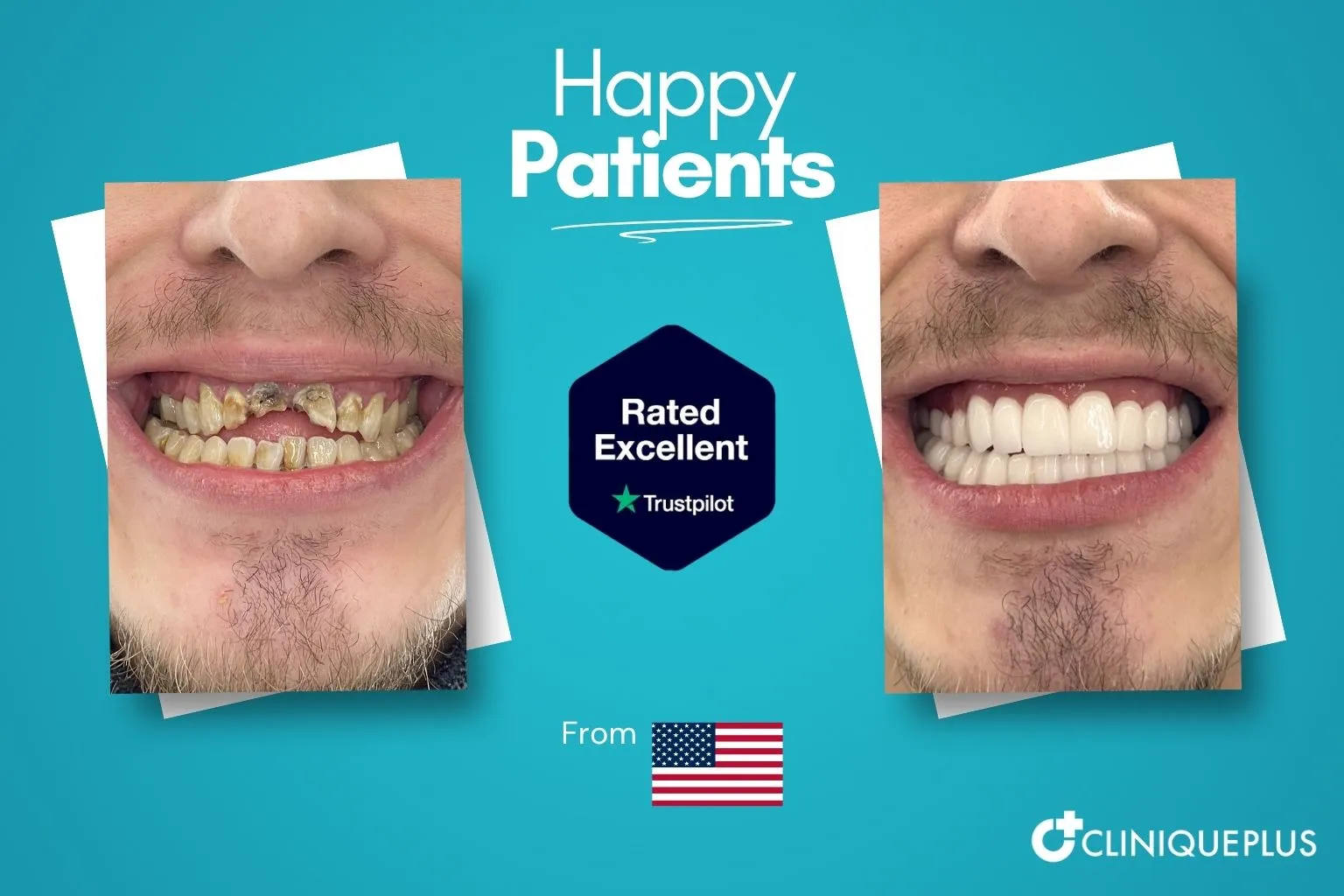
For everyone else, the practical answer is low cost rather than free: in Istanbul, a single implant with crown starts from $250 and a complete All-on-4 arch from $4,670, including hotel and transfers. Most recovering addicts who contact us have already been quoted $25,000 to $60,000 at home.
Why Dental Implants Are So Hard to Get Free in the USA and Canada
- Implants are classed as elective. Public programs and most insurance plans treat implants as cosmetic, even when they are the only functional option after addiction-related tooth loss.
- Dental insurance caps are tiny. Typical US dental plans pay $1,000 to $2,500 per year, which barely covers one crown.
- Charity capacity is small. Nonprofit dental programs are overwhelmed and prioritise people with disabilities, seniors and medically fragile patients.
- Addiction history is not a qualifying category. Unlike disability or age, recovery status does not unlock a dedicated national program, even though the need is enormous: the University of Utah FLOSS study found that people who received dental care during rehab were 80 percent more likely to complete their program.
“Dental Implant Grants” for Recovering Addicts: What Is Real and What Is Marketing
Search results are full of “implant grant” programs. Here is how to read them:
- Government grants: none exist for individuals. Any site claiming federal implant grants is misleading you.
- “Cosmetic dentistry grant” programs: these are marketing schemes. A participating dentist offers a partial discount (often 25 to 30 percent) on treatment you still pay for, and you must first pay for a consultation. They are a coupon, not a grant.
- Foundation grants: a small number of local foundations, Rotary clubs and church funds give one-off dental assistance. They are real but tiny, and applications go through social workers or case managers rather than dentists.
- Recovery-specific funds: some treatment centres, sober-living networks and Salvation Army Adult Rehabilitation Centers keep dental assistance funds or partnerships with local dentists. Always ask your case manager; this is the most under-used route.
Rule of thumb: if a “grant” requires you to pay for a consultation first, or the dentist is chosen for you, it is a discount program. Get the full written treatment plan and total price before you sign anything.
Free and Low-Cost Dental Implant Programs in the United States
| Program | Who Qualifies | What It Really Covers | Typical Wait |
|---|---|---|---|
| Dental school implant clinics (graduate periodontics / prosthodontics) | Anyone; some schools screen for suitable teaching cases | Implants at roughly 30–50% below private fees, supervised by faculty. Not free. | Months; treatment spread over a year or more |
| Dental Lifeline Network – Donated Dental Services (DDS) | Permanent disability, age 65+, or medically fragile, with no other means to pay | Comprehensive free treatment from volunteer dentists; implants occasionally included | Long waiting lists; many states closed to new applicants at times |
| Medicaid adult dental | Income-based, varies by state | Exams, extractions, fillings, sometimes dentures. Implants only in rare medically necessary cases | Immediate if enrolled |
| Federally Qualified Health Centers (FQHC) | Anyone; sliding-scale fees by income | Basic care and extractions; implants rarely offered | Weeks |
| Mission of Mercy and free dental days | First come, first served | Extractions, fillings, occasionally dentures. No implants. | Event-based |
| Clinical trials (ClinicalTrials.gov) | Must match study criteria | Free or heavily reduced implants when a study is recruiting | Depends on recruitment |
| VA dental care | Veterans with service-connected dental conditions, 100% disability rating, former POWs and other categories | Comprehensive care including implants for eligible veterans | Weeks to months |
| Recovery program partnerships and charitable funds | Clients of participating treatment centres, sober-living networks, faith organisations | Case-by-case funding, often for extractions and dentures, sometimes implants | Varies |
| Give Back a Smile (AACD Charitable Foundation) | Survivors of domestic or sexual violence with front-tooth injuries | Free restoration of damaged front teeth; not general addiction damage | Months |
How to Work This List
- Start with your case manager or sponsor. Ask specifically whether the program has a dental fund or partner dentist. Recovery-linked funding is the route most people never ask about.
- Apply to Dental Lifeline Network if you have a documented disability, are over 65, or have a serious medical condition alongside your recovery.
- Call the nearest dental school and ask for the graduate implant or prosthodontics clinic. Explain you are in recovery and need full-mouth or multiple-tooth replacement; teaching clinics often want complex cases.
- Search ClinicalTrials.gov for “dental implant” studies recruiting in your state.
- Get a written quote from at least one private dentist so you know your real number before comparing options abroad.
Free and Low-Cost Options for Canadians in Recovery
- Canadian Dental Care Plan (CDCP): income-tested federal coverage for basic services. Implants are not covered; dentures and extractions may be.
- Provincial assistance dental programs (for example Ontario Works, ODSP, Alberta Works, BC Employment and Assistance): emergency and basic dental only; no implants.
- Dental school clinics (Toronto, UBC, McGill, Dalhousie, Alberta, Manitoba, Saskatchewan, Western, Laval, Montreal): reduced-fee implants in graduate programs, with long timelines.
- Community and charitable clinics in larger cities offer extractions and dentures on a sliding scale.
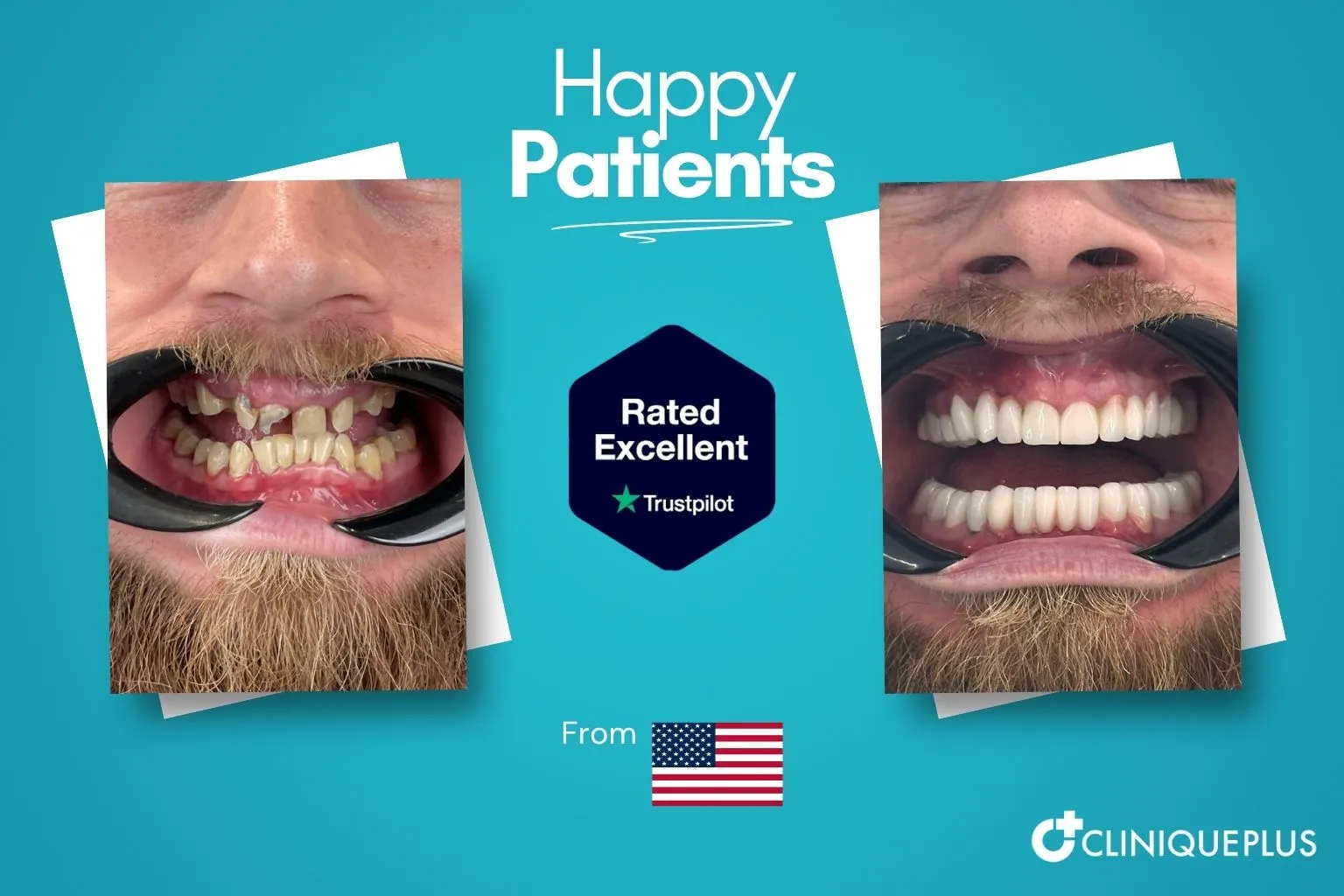
Because implants fall outside every public plan, Canadians in recovery are among CLINIQUEPLUS’s most frequent full-arch patients. Our guide to dental tourism destinations for Canadians compares the options in detail.
The Realistic Plan: Free Where Possible, Low-Cost for the Rest
Most people in recovery end up combining routes:
- Extractions and infection control through Medicaid, an FQHC or a free clinic at home. This is often genuinely free and removes the urgent health risk.
- Implants and final teeth where the price per implant is a fraction of US or Canadian fees.
- Funding from a mix of savings, family support, a recovery fund, crowdfunding or financing.
This is exactly where Turkey fits. The work that is impossible to get free at home is the part that costs the least in Istanbul.
What Dental Implants Cost for Recovering Addicts in Turkey vs the USA and Canada
| Treatment | CLINIQUEPLUS Istanbul (USD) | USA (typical) | Canada (typical, CAD) |
|---|---|---|---|
| Single dental implant (implant + abutment + crown) | From $250 | $3,000 – $6,000 | $4,000 – $8,000 |
| All-on-4, one jaw | From $4,670 | $20,000 – $30,000 | $25,000 – $35,000 |
| All-on-4, both jaws | From $7,960 | $30,000 – $60,000 | $40,000 – $70,000 |
| All-on-6, one jaw | From $5,410 | $24,000 – $35,000 | $30,000 – $40,000 |
| All-on-6, both jaws | From $9,440 | $48,000 – $70,000 | $60,000 – $80,000 |
| Full mouth reconstruction (implants + crowns) | $8,000 – $15,000 | $50,000 – $90,000 | $60,000 – $100,000 |
Starting prices for 2026; the final plan depends on your X-rays. All-on-4, All-on-6 and full mouth packages include hotel accommodation and VIP airport transfers. Bone grafting, where needed, is quoted individually. For a breakdown of what drives the price, see meth mouth repair cost: USA vs Turkey and cheap dental implants in Turkey: an honest guide.
A Typical Budget
A recovering addict from Ohio with 14 remaining broken teeth in the upper jaw and a US quote of $27,000 for extractions plus All-on-4 paid $4,670 at CLINIQUEPLUS for the same treatment, plus roughly $1,300 in flights across two trips. Total: under $6,000, or about 78 percent less. Extractions, temporary teeth, the CBCT scan, hotel and transfers were included.
Get a Free, Judgment-Free Cost Estimate
Tell us how many teeth you are missing, where you are in your recovery, and whether you already have a quote from home. Our team will reply within 24 hours with a personalised treatment plan, a documented non-opioid pain protocol and an all-inclusive price. No deposit, no obligation, completely confidential.
How Recovering Addicts Actually Fund Their Implants
Family Support as a Recovery Milestone
A large share of our recovery patients’ treatment is paid for by parents, spouses, siblings or grandparents. Many families see a restored smile as the final step of getting clean and prefer it to spending the same money on anything else. Family members can contact us directly on your behalf; see paying for a family member’s dental implants abroad.
Recovery Community and Sponsors
Sponsors, home groups and faith communities often contribute to a specific, visible goal like new teeth. A written treatment plan and price from us makes that conversation concrete.
Crowdfunding
Dental campaigns on GoFundMe and similar platforms perform well when they show before photos, a clear target and a clinic quote. A $6,000 goal for a full arch in Istanbul is far more achievable than a $30,000 goal for the same work at home.
Financing
US patients sometimes use medical credit cards or personal loans. The advantage of the Turkey route is that the loan is a fraction of the size.
Employer and Reintegration Programs
Some second-chance employers and reintegration nonprofits fund dental work because it directly affects employability. Ask your employment counsellor.
What Is Included When You Treat With CLINIQUEPLUS
- ✅ Free online consultation and X-ray review before you travel
- ✅ 3D CBCT scan and panoramic X-ray on arrival
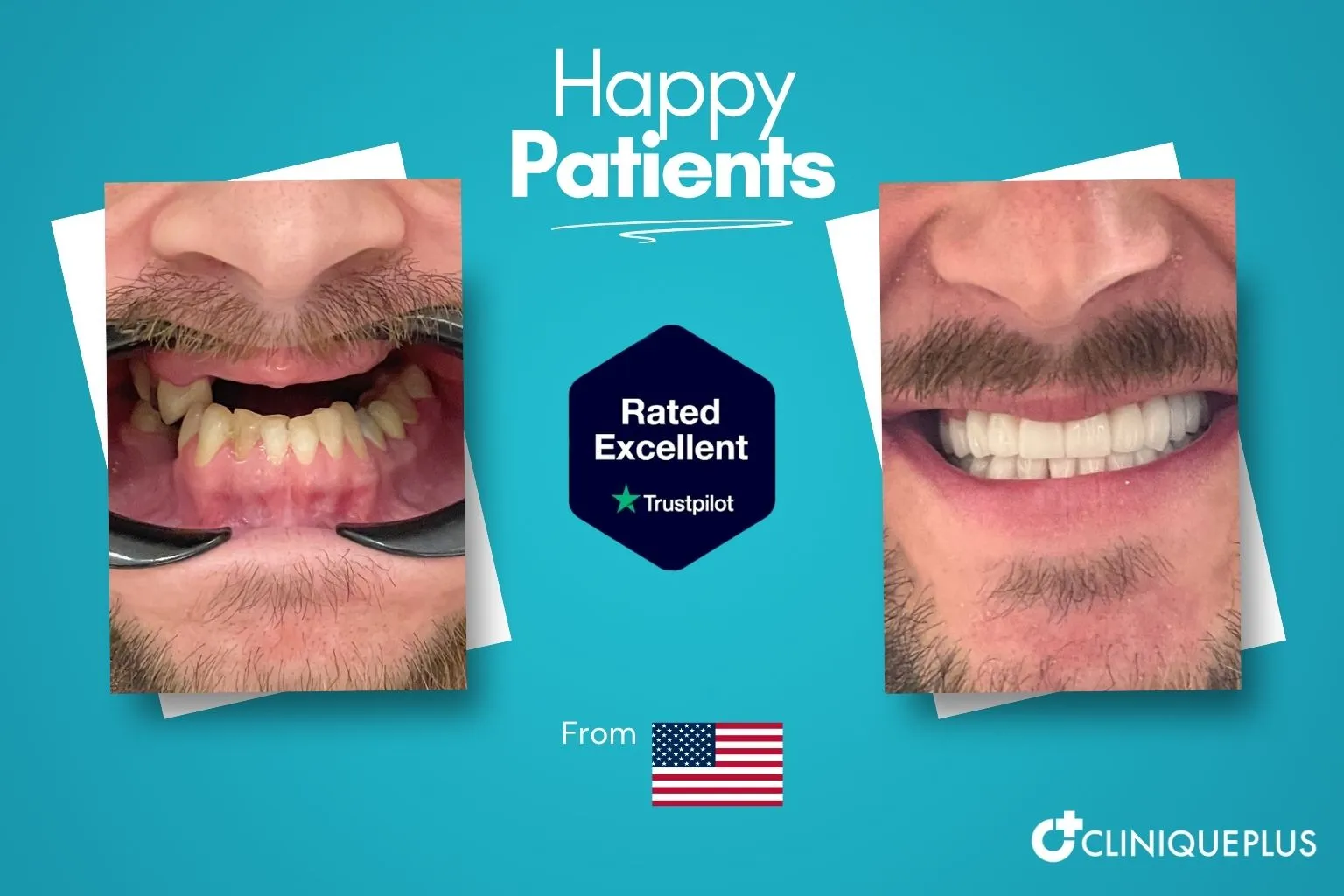
- ✅ Extractions, implant surgery and temporary teeth in the first visit (5–7 days)
- ✅ Final zirconia crowns or full-arch prosthesis in the second visit (3–5 days)
- ✅ Hotel accommodation and VIP airport transfers for All-on-4, All-on-6 and full mouth packages
- ✅ Documented non-opioid pain management protocol for patients in recovery
- ✅ Dedicated English-speaking patient coordinator
- ✅ Straumann or Medigma implant systems with international warranty
Am I a Candidate? The Medical Side in Brief
Cost is only half the question. Implants need stable sobriety (generally 3 to 6 months, 6 to 12 after methamphetamine), gum disease under control, enough jawbone or a grafting plan, and a pain protocol that keeps you safe. Patients on methadone or Suboxone maintenance are welcome; their prescriber is simply looped in. All of this is covered in depth in our main guide to dental implants after drug addiction, and for methamphetamine damage specifically in meth mouth fix in Turkey. If you have lost jawbone after years without teeth, read dental implants with bone loss.
“Nobody in recovery should be told their only options are a $40,000 quote or nothing. Get the infection handled at home, then let us show you what the rest actually costs.”
Frequently Asked Questions
Are there free dental implants for recovering addicts?
Truly free implants are rare. No US grant pays for implants, Medicaid almost never covers them, and free clinics offer extractions and dentures. Realistic routes are dental school clinics at reduced fees, Dental Lifeline Network for people who are disabled or medically fragile, clinical trials, VA dental for eligible veterans, recovery-program funds, and low-cost treatment abroad from $250 per implant.
Are dental implant grants for recovering addicts real?
There is no government grant program for implants. Advertised “implant grants” are usually partial discounts from participating dentists, so you still pay most of the fee. Treat them as a coupon and always get the full written price first.
Does Medicaid cover dental implants?
Almost never. Adult Medicaid dental benefits vary by state and cover basic care, extractions and sometimes dentures. Implants are only approved in rare medically necessary cases.
How can I find free dental implants for recovering addicts near me?
Ask your treatment centre or sponsor about dental funds, call the nearest dental school’s graduate implant clinic, apply to Dental Lifeline Network if eligible, search ClinicalTrials.gov, and check VA eligibility if you served. Then compare those options with a written quote from Istanbul.
How much do dental implants cost for recovering addicts in Turkey?
Single implants from $250, All-on-4 from $4,670 per jaw and All-on-6 from $5,410 per jaw at CLINIQUEPLUS, with hotel and transfers included in full-arch packages.
Can a family member or my recovery program pay for my treatment?
Yes. Family members can contact us on your behalf, receive the quote and pay directly. Some treatment centres and sober-living networks maintain dental assistance funds; ask your case manager.
Will I be given opioids after implant surgery?
Not at CLINIQUEPLUS unless you and your prescriber specifically request otherwise. We use local anaesthesia, non-opioid sedation and NSAIDs, documented in your plan before you travel.
Is it safe to travel to Turkey for dental implants?
Yes. CLINIQUEPLUS uses internationally certified implant brands, operates to European standards and holds a 4.9-star Trustpilot rating from over 100 international patients. See is dental tourism in Turkey safe?
Take the Next Step — Free, Confidential Consultation
You have done the hard part. Let us show you what your smile will actually cost.
Our English-speaking coordinators reply within 24 hours with a personalised assessment, a confirmed non-opioid protocol and a complete all-inclusive price. No deposit, no pressure, no judgment.
- 📍 Location: Kazlıçeşme, Kennedy Cad. Büyükyalı İstanbul Sitesi H Blok No:53, 34025 Zeytinburnu / Istanbul, Turkey
- 📞 WhatsApp / Phone: +90 542 160 30 30
- 🌐 Website: cliniqueplus.com
- ⭐ Rating: 4.9 / 5.0 from 100+ international patients
Disclaimer: This article is for informational purposes only and does not constitute medical or financial advice. Program eligibility, coverage rules and fees change frequently; verify details directly with each organisation. Individual suitability for dental implants must be assessed by a qualified clinician. If you or someone you love is struggling with addiction, contact SAMHSA’s National Helpline at 1-800-662-4357 for free, confidential support.