
Dental Implants After Cancer Treatment (Chemo and Radiation): Timing, Safety and Turkey Cost Guide
You beat cancer. Now you want your smile back.
For many survivors, the treatment that saved their life also took a heavy toll on their mouth. Chemotherapy dries out saliva and weakens enamel. Radiation to the head and neck damages the jawbone’s blood supply and causes rampant “radiation caries”. Surgery for oral cancer can remove teeth and bone altogether. Months or years later, you may be left with missing, broken or loose teeth, difficulty chewing, and a smile you avoid showing.
The good news: dental implants after cancer treatment are possible for most survivors, including many who had radiation to the jaw. What changes is the planning. Timing, radiation dose, medications like bisphosphonates, and your oncologist’s clearance all shape the protocol. This guide explains exactly how it works, what can disqualify you, how long you need to wait after chemo or radiotherapy, what it costs in the USA and Canada versus Turkey, and how CLINIQUEPLUS in Istanbul plans implant treatment for cancer survivors.
Can You Get Dental Implants After Cancer Treatment?
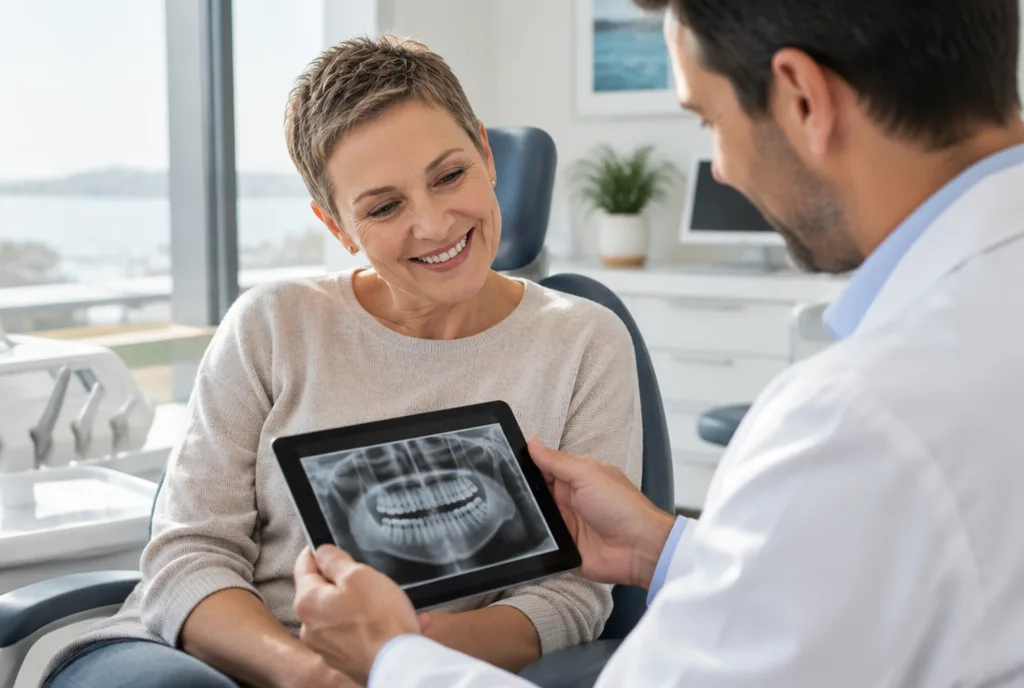
Yes. A history of cancer does not rule out dental implants. What matters is where you are now: whether active treatment has finished, whether your oncologist agrees you are fit for elective surgery, how well your blood counts and immune system have recovered, and, if you had radiotherapy, how much radiation reached the part of the jaw where implants would go.
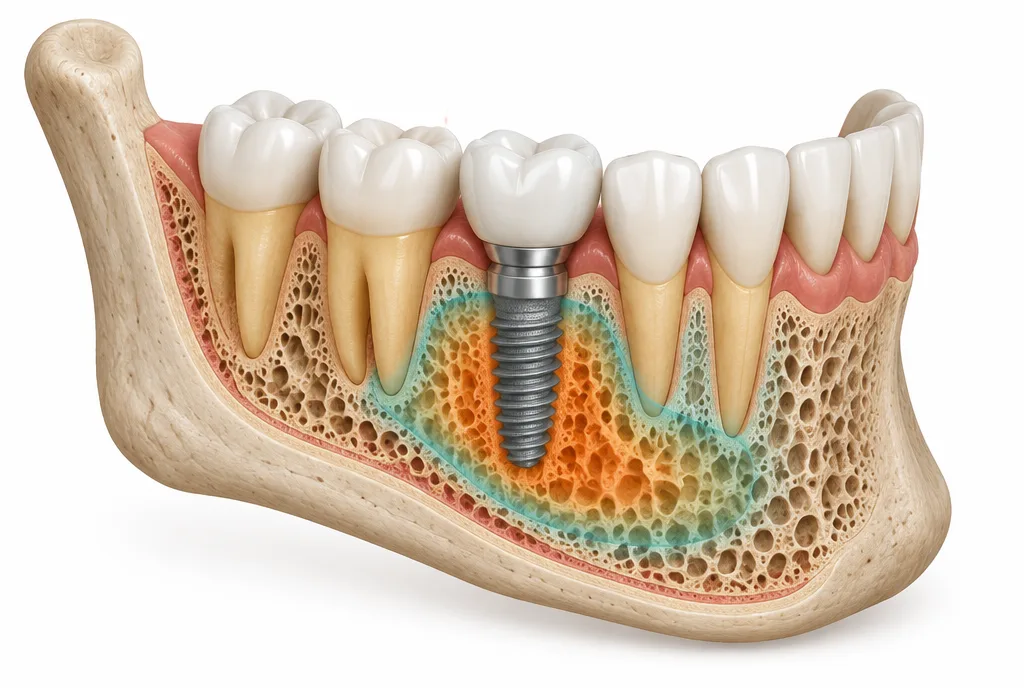
Dental implants work through osseointegration: a titanium post fuses with living jawbone and becomes a permanent anchor for a crown, bridge or full-arch prosthesis. That process depends on healthy bone with a good blood supply. Cancer therapies affect that in different ways:
- Chemotherapy is systemic and temporary. Once your counts and healing capacity return to normal, research consistently shows that a history of chemotherapy does not meaningfully lower long-term implant survival.
- Radiation therapy to the head and neck is local and permanent. It reduces the blood supply and cell activity in the irradiated bone for life, which slows healing and raises the risk of a serious complication called osteoradionecrosis. Implants can still succeed, but planning is stricter.
- Bone-protecting drugs (bisphosphonates such as zoledronic acid, or denosumab) given for bone metastases or myeloma are often a bigger obstacle than the cancer itself, because they can cause medication-related osteonecrosis of the jaw.
- Surgery for oral, jaw or throat cancer may remove bone and teeth, but reconstructed jaws are frequently rebuilt with implants as part of the recovery plan.
In short: if you are in remission, off active treatment and cleared by your oncologist, you are very likely a candidate. The rest of this guide explains how the details are managed.
How Cancer Treatment Damages Teeth, Gums and Jawbone
Understanding the damage explains why survivors so often need major dental work, and why the treatment plan has to be tailored to the therapy you received.
Chemotherapy: “Chemo Ruined My Teeth”
It is one of the most common things survivors tell us, and it is not an exaggeration. Chemotherapy attacks rapidly dividing cells, and the lining of your mouth is full of them. Typical effects include:
- Oral mucositis: painful ulcers that make brushing and eating difficult, so plaque builds up for weeks at a time.
- Dry mouth (xerostomia): less saliva means less natural protection against acid and bacteria.
- Rapid decay and enamel weakening: sugary supplements, anti-nausea medication, vomiting and dry mouth combine to demineralise enamel. Teeth chip, crack and decay at the gum line.
- Gum infections: a suppressed immune system lets existing gum disease progress quickly, loosening teeth.
- Bleeding and delayed healing while platelets and white cells are low.
Chemotherapy does not make healthy teeth simply fall out. What it does is accelerate every existing problem until extraction becomes unavoidable. The important point for implants is that these effects are reversible at the systemic level. Once treatment ends and your counts recover, your bone heals normally again.
Radiation Therapy to the Head and Neck
Radiotherapy for cancers of the mouth, tongue, tonsils, throat, salivary glands, nasal cavity or thyroid frequently includes part of the upper or lower jaw in the treatment field. Its dental effects are lasting:
- Permanent dry mouth when salivary glands are in the field, leading to “radiation caries”: aggressive decay around the necks of the teeth, often within a year of treatment.
- Reduced bone blood supply (hypovascular, hypocellular, hypoxic bone): irradiated bone heals slowly and struggles to fight infection.
- Osteoradionecrosis (ORN): exposed, non-healing bone that can follow extractions or surgery in heavily irradiated areas. Risk rises sharply above roughly 50 to 60 Gy.
- Trismus (restricted mouth opening) from scarring of the jaw muscles, which can complicate dental treatment.
- Fragile gum tissue that is more prone to recession and peri-implantitis.
Bisphosphonates, Denosumab and Other Bone-Modifying Drugs
Patients with breast cancer, prostate cancer, lung cancer or multiple myeloma that has spread to bone are often treated with intravenous zoledronic acid (Zometa) or injections of denosumab (Xgeva). These drugs protect the skeleton but suppress bone turnover in the jaw, which can lead to medication-related osteonecrosis of the jaw (MRONJ) after extractions or implant surgery. For implants, this history is usually more decisive than the chemotherapy itself, and it must be disclosed at consultation. Oral bisphosphonates taken for osteoporosis carry a much lower risk, especially under three years of use.
Surgery for Oral and Jaw Cancer
Removing a tumour may mean removing part of the jaw (a mandibulectomy or maxillectomy), the floor of the mouth, or multiple teeth. Many patients receive a bone graft from the fibula or hip to rebuild the jaw. Implants are commonly placed into these reconstructed segments once healing is complete, restoring the ability to chew, speak and smile.
Steroids, Stem Cell Transplants and Immunotherapy
Long courses of corticosteroids reduce bone density and healing. Bone marrow or stem cell transplant patients may develop chronic graft-versus-host disease of the mouth, with dry, fragile tissues. Newer immunotherapies have fewer direct dental effects but still require oncologist input on timing. All of these are manageable, but each changes the plan.
How Long After Chemo or Radiation Can You Get Dental Implants?
There is no single number that fits every survivor, but there are well-established ranges that oncologists and implant surgeons use. The table below summarises typical waiting periods and the reasoning behind them.
| Treatment Received | Typical Minimum Wait | Key Conditions |
|---|---|---|
| Chemotherapy only | 6–12 months after the final cycle | Oncologist clearance; normal white cell and platelet counts; no active mucositis or infection |
| Radiation to head and neck (implant site below ~50 Gy) | 12 months after the last session | Dose map reviewed; atraumatic surgery; antibiotic cover; extended healing before loading |
| Radiation to head and neck (implant site above ~50–60 Gy) | 12–24 months, case-by-case | Higher ORN risk; hyperbaric oxygen or an implant position outside the high-dose zone may be recommended |
| Oral cancer surgery with jaw reconstruction | 12 months after reconstruction | Graft fully healed and stable; surgeon’s approval; often combined with radiation rules above |
| IV bisphosphonates or denosumab (bone metastases) | Often not recommended; assessed individually | MRONJ risk remains for years; alternative non-surgical options are usually preferred |
| Oral bisphosphonates (osteoporosis) | No fixed wait if under 3 years of use | Longer use requires discussion with the prescribing doctor; drug holiday sometimes considered |
| Stem cell or bone marrow transplant | 12 months minimum | Immune recovery confirmed; no active graft-versus-host disease of the mouth |
A useful principle: waiting longer is not automatically safer. After extractions, the jaw loses up to a quarter of its width within the first year. Survivors who delay for many years often need more bone grafting, which is exactly what surgeons prefer to avoid in irradiated bone. The best time is usually as soon as you meet the criteria above, not later.
What Your Oncologist Will Want to Confirm
- Your cancer is in remission or stable, with no planned treatment in the next 6 to 12 months.
- Your complete blood count (CBC) is within safe limits for surgery.
- You are not currently on, or recently finished, IV antiresorptive drugs.
- Any radiation dose to the jaw is documented so the dental team can plan around it.
What Disqualifies You From Dental Implants After Cancer?
Honest answers matter more here than anywhere else in implant dentistry. The following situations mean implants should be postponed or, occasionally, avoided:
- ⛔ Active cancer treatment (ongoing chemotherapy, radiotherapy or planned surgery)
- ⛔ Existing osteoradionecrosis or osteonecrosis of the jaw
- ⛔ Current or recent IV bisphosphonate / denosumab therapy for bone metastases
- ⚠️ Radiation above 60 Gy directly at the planned implant site without a risk-reduction plan (hyperbaric oxygen, alternative site, or a removable solution)
- ⚠️ Neutropenia or low platelets on a recent blood test
- ⚠️ Severe trismus that prevents surgical access
- ⚠️ Heavy smoking, uncontrolled diabetes or untreated gum disease, which raise failure risk for any patient
Most of these are temporary or workable. For example, a survivor whose upper jaw received a high radiation dose but whose lower jaw was outside the field may still be an excellent candidate for lower implants. Another may be better served by a well-made implant-retained overdenture using only two or four implants in the safest bone. This is why CLINIQUEPLUS reviews every cancer survivor’s records individually rather than applying a blanket rule.
Get a Free Oncology-Aware Implant Assessment
Send us your treatment summary, the date of your last chemotherapy or radiation session, and a recent panoramic X-ray if you have one. Our implant team will review your case with your cancer history in mind and reply within 24 hours with a candid assessment, a proposed protocol and an all-inclusive cost estimate. No deposit, no obligation.
The Oncology Clearance Protocol at CLINIQUEPLUS
Cancer survivors are not treated as routine implant cases at CLINIQUEPLUS. Before any travel is booked, we complete a remote pre-assessment built around your oncology history.
Records We Ask For
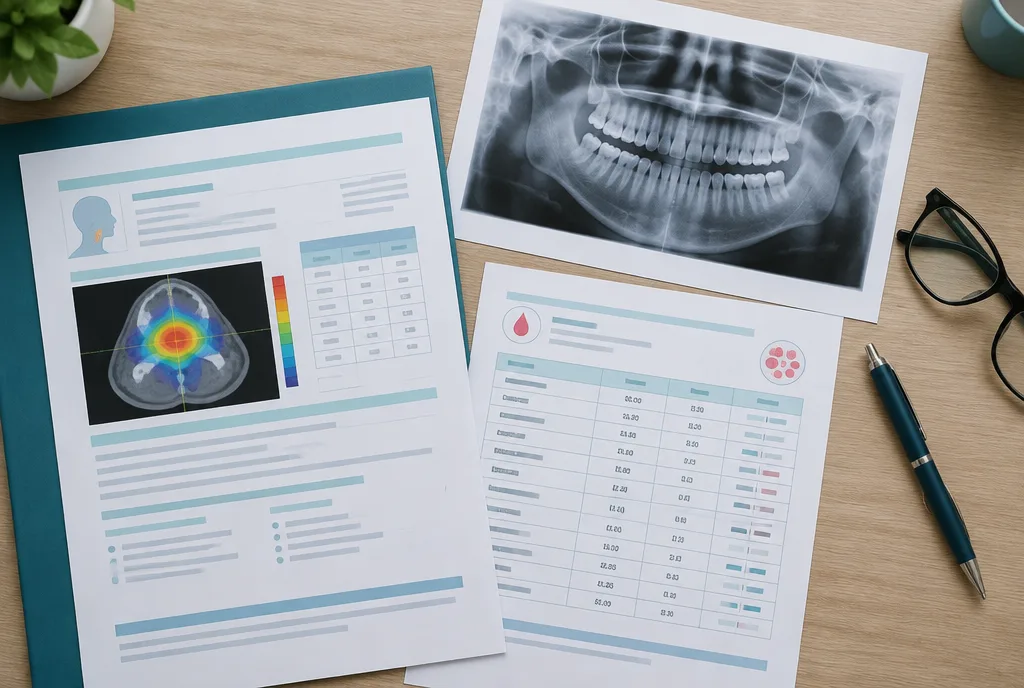
- Treatment summary from your oncologist: diagnosis, stage, treatments received and dates.
- Radiation report (if applicable): total dose in Gy, number of fractions and, ideally, the dose distribution to the upper and lower jaw.
- Current medication list, especially bisphosphonates, denosumab, steroids and blood thinners.
- Recent complete blood count (within the last 4 to 6 weeks).
- Oncologist clearance letter confirming you are fit for elective oral surgery.
- Panoramic X-ray or CBCT scan; if you do not have one, a CBCT is taken on your first day in Istanbul.
How the Protocol Is Adapted
- Implant positioning in the least irradiated bone, guided by your dose report and CBCT.
- Atraumatic surgical technique: minimal flap elevation, gentle drilling with copious cooling, and no unnecessary bone grafting in irradiated areas.
- Antibiotic prophylaxis before and after surgery, plus chlorhexidine rinses.
- Extended healing (delayed loading): irradiated bone is given more time before final crowns are fitted, typically 4 to 6 months rather than 3.
- Hyperbaric oxygen coordination: for high-dose sites, we can advise on the classic 20-before / 10-after HBO protocol arranged in your home country before travel.
- Dry-mouth support: fluoride trays, saliva substitutes and a tailored hygiene plan to protect natural teeth and implants.
- Pain management without opioids where requested, using local anaesthesia, non-opioid sedation and NSAIDs.
Treatment Options for Cancer Survivors: From Single Implants to Full Arch
The right solution depends on how many teeth were lost, the quality of the remaining bone, and which parts of the jaw were irradiated.
Single or Multiple Dental Implants
For survivors who lost a few teeth to radiation caries or chemotherapy-related decay, individual titanium implants with zirconia crowns replace each tooth without touching the neighbours. Ideal when the surrounding bone is healthy and outside the high-dose zone.
All-on-4 Dental Implants
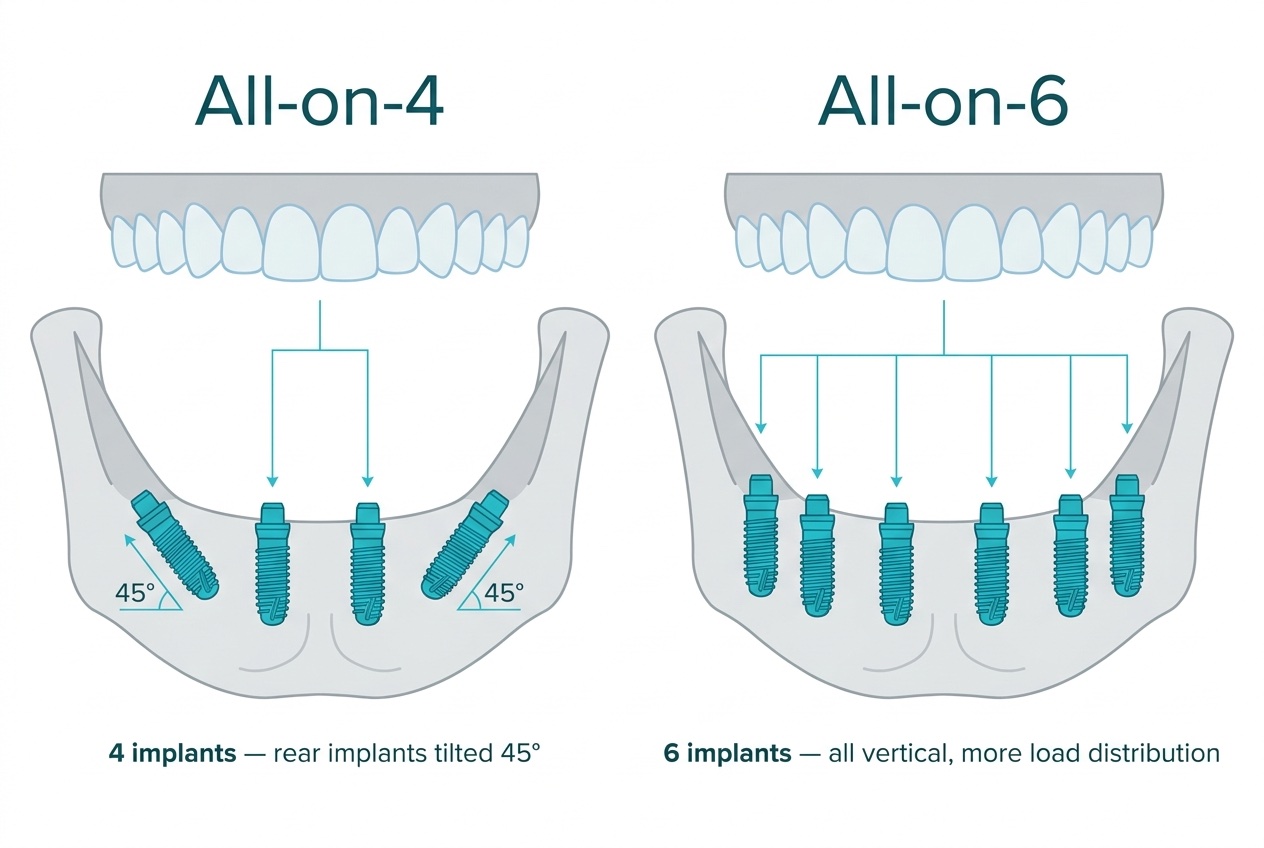
All-on-4 supports a full fixed arch of 12 to 14 teeth on just four implants, with the rear two tilted up to 45 degrees. This is often the preferred option after cancer treatment because it uses the dense bone at the front of the jaw, which is frequently outside or at the edge of the radiation field, and usually avoids bone grafting entirely.
All-on-6 Dental Implants
Where bone volume is good, All-on-6 spreads chewing forces across six implants for maximum long-term stability. Survivors with good bone and no radiation to the jaw are frequently candidates.
Implant-Retained Overdentures
For survivors with heavily irradiated jaws or a history of bone-modifying drugs, a removable overdenture clipped onto two to four implants placed in the safest bone offers a big improvement over loose conventional dentures with far less surgery.
Zygomatic Implants
When the upper jaw has lost too much bone after a maxillectomy or radiation, long zygomatic implants anchored in the cheekbone can support a full arch without grafting. These are assessed on a case-by-case basis with a CBCT scan.
Bone Grafting: When It Helps and When It Is Avoided
Bone grafting rebuilds jawbone lost after extractions and is routine for non-irradiated patients. In heavily irradiated bone, however, grafts heal poorly and add risk, so our surgeons prefer to use existing bone with tilted, shorter or zygomatic implants instead.
Crowns, Bridges and Veneers for Damaged Natural Teeth
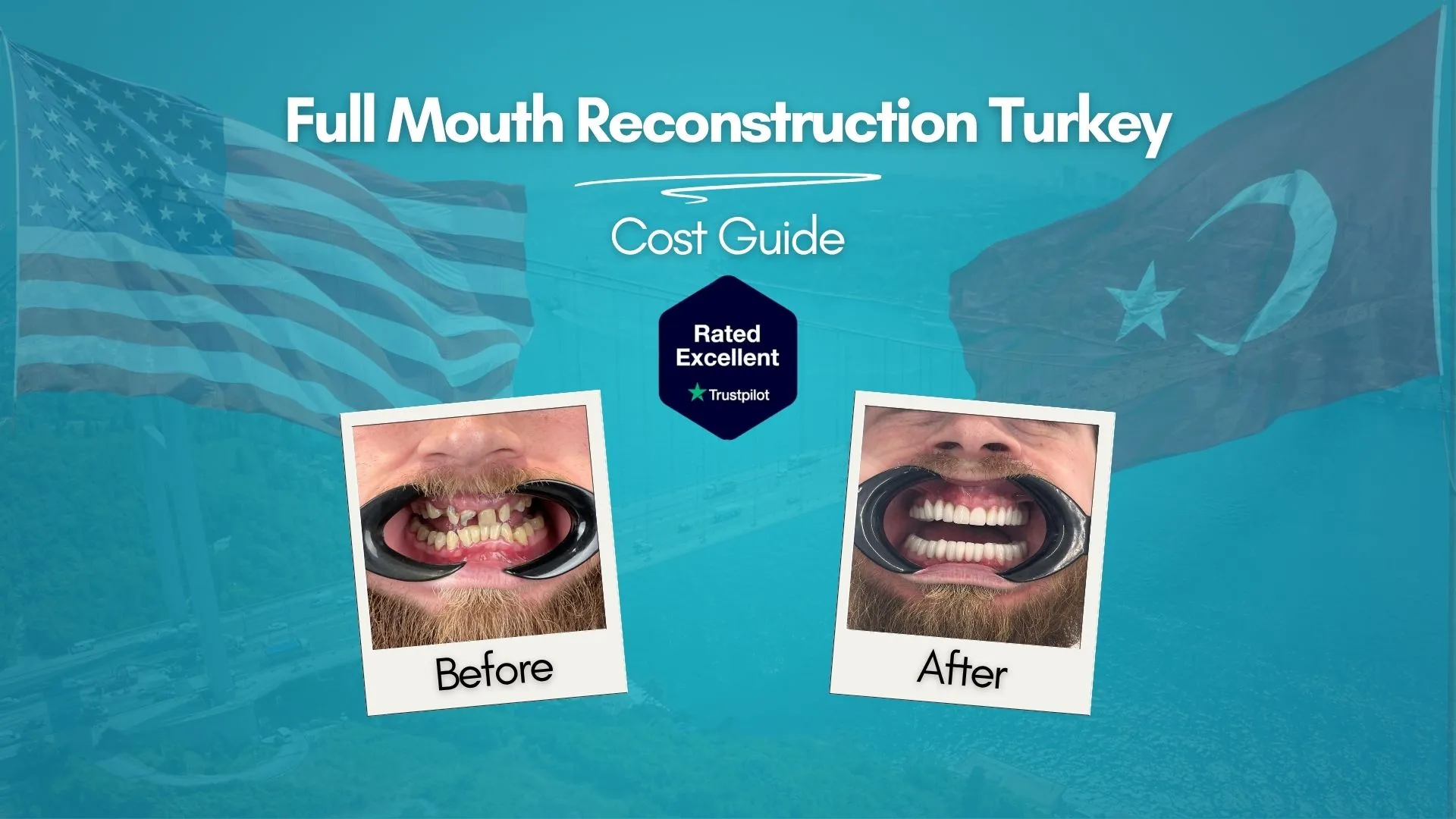
Many survivors keep some natural teeth that are chipped, discoloured or decayed at the gum line. Zirconia crowns and, where appropriate, veneers can restore these alongside implant work in the same visit, giving a complete full mouth reconstruction.
Do Dental Implants Succeed After Cancer Treatment? What the Evidence Says
Research over the past two decades gives a consistent picture:
- Chemotherapy: systematic reviews find no significant difference in implant survival between patients with a history of chemotherapy and healthy controls, once treatment has ended and healing has recovered.
- Radiotherapy: implant survival in irradiated jaws is lower but still high, typically reported between 85 and 95 percent at five years compared with 95 to 98 percent in non-irradiated bone. The upper jaw and doses above 50 to 60 Gy are the main risk factors.
- Timing: placing implants at least 12 months after radiation is associated with fewer complications than earlier placement.
- Quality of life: multiple studies in head and neck cancer survivors show that implant-supported teeth significantly improve chewing, speech, nutrition and social confidence compared with conventional dentures, which often cannot be tolerated in a dry, irradiated mouth.
For most survivors, the question is not whether implants are possible but which design and protocol give the safest result. That is a planning problem, and it is solvable.
Cost Comparison: Dental Implants After Cancer in the USA and Canada vs Turkey
Cancer treatment is expensive, and by the time survivors turn to their teeth, savings are often depleted. Dental insurance rarely helps: most US plans cap benefits at $1,000 to $2,500 per year, and provincial plans in Canada generally do not cover implants at all. Medical insurance occasionally covers “medically necessary” dental rehabilitation after head and neck cancer, but approval is inconsistent and slow.
This is why so many survivors from the United States and Canada choose Istanbul.
| Treatment | CLINIQUEPLUS Istanbul (USD) | USA (typical) | Canada (typical, CAD) |
|---|---|---|---|
| Single dental implant (implant + abutment + crown) | From $250 | $3,000 – $6,000 | $4,000 – $8,000 |
| All-on-4, one jaw | From $4,670 | $20,000 – $30,000 | $25,000 – $35,000 |
| All-on-4, both jaws | From $7,960 | $30,000 – $60,000 | $40,000 – $70,000 |
| All-on-6, one jaw | From $5,410 | $24,000 – $35,000 | $30,000 – $40,000 |
| All-on-6, both jaws | From $9,440 | $48,000 – $70,000 | $60,000 – $80,000 |
| Full mouth reconstruction (implants + crowns) | $8,000 – $15,000 | $50,000 – $90,000 | $60,000 – $100,000 |
Prices are starting prices for 2026 and depend on the final treatment plan. Additional procedures such as bone grafting, sinus lifts or zygomatic implants are quoted individually after your CBCT scan. All-on-4, All-on-6 and full mouth packages include hotel accommodation and VIP airport transfers. For a detailed breakdown, see our dental implant cost in Turkey vs USA and Canada guide.
A Realistic Example
A 58-year-old survivor of tonsil cancer from Texas received chemoradiation in 2023 and lost most of her upper teeth to radiation caries. A US quote for an upper All-on-4 with extractions came to $28,500. At CLINIQUEPLUS, the same treatment with a 12-month post-radiation wait, antibiotic protocol and delayed loading came to $4,670 plus around $1,400 in flights across two trips. Total savings: roughly $22,000, or 78 percent.
Why Cancer Survivors Choose CLINIQUEPLUS in Istanbul
Oncology-Aware Planning
Our implantologists regularly treat patients with complex medical histories, including post-radiation and post-chemotherapy cases. Your protocol is written before you travel, not improvised in the chair.
Everything Under One Roof
CBCT imaging, extractions, implant surgery, bone grafting where appropriate, and the in-house laboratory that makes your zirconia teeth are all in one facility. Fewer appointments and less travel between providers matters when your energy is still recovering.
Speed Without Shortcuts
A US treatment plan involving an oral surgeon, a periodontist, a prosthodontist and a lab can stretch over a year. At CLINIQUEPLUS the surgical phase is completed in a single 5 to 7 day visit, with a second short visit for final teeth after healing.
Premium Implant Systems
We use internationally certified implant brands with published long-term data, including Straumann and Medigma, and offer the same warranties to international patients as to local ones.
Compassionate, Confidential Care
Dedicated English-speaking patient coordinators handle your records, appointments, hotel and transfers. Many survivors tell us the most valuable part was being treated as a person rebuilding their life, not as a risk to be managed.
What Is Included in the All-Inclusive Package
- ✅ Free online consultation and oncology-record review before you travel
- ✅ 3D CBCT scan and panoramic X-ray on arrival
- ✅ Extractions, implant surgery and temporary teeth in the first visit
- ✅ Final zirconia crowns or full-arch prosthesis in the second visit
- ✅ Hotel accommodation and VIP airport transfers (All-on-4, All-on-6 and full mouth packages)
- ✅ Antibiotic and dry-mouth aftercare kit with written instructions
- ✅ Non-opioid pain management on request, documented in your plan
- ✅ Dedicated English-speaking patient coordinator throughout
- ✅ Straumann or Medigma implant systems with international warranty
Step-by-Step: How Dental Implants After Cancer Work at CLINIQUEPLUS
Step 1: Free Online Consultation and Record Review
Fill in the form on this page or message us on WhatsApp. Share your oncology summary, radiation report, medication list and any X-rays. Our implant team reviews everything and replies within 24 hours with an honest assessment of your candidacy, a proposed protocol and a cost estimate.
Step 2: Oncologist Clearance and Pre-Travel Planning
We provide a short clearance template your oncologist can complete. If hyperbaric oxygen is advised for a high-dose site, we help you arrange it at home before travel. Blood tests are confirmed within six weeks of your visit.
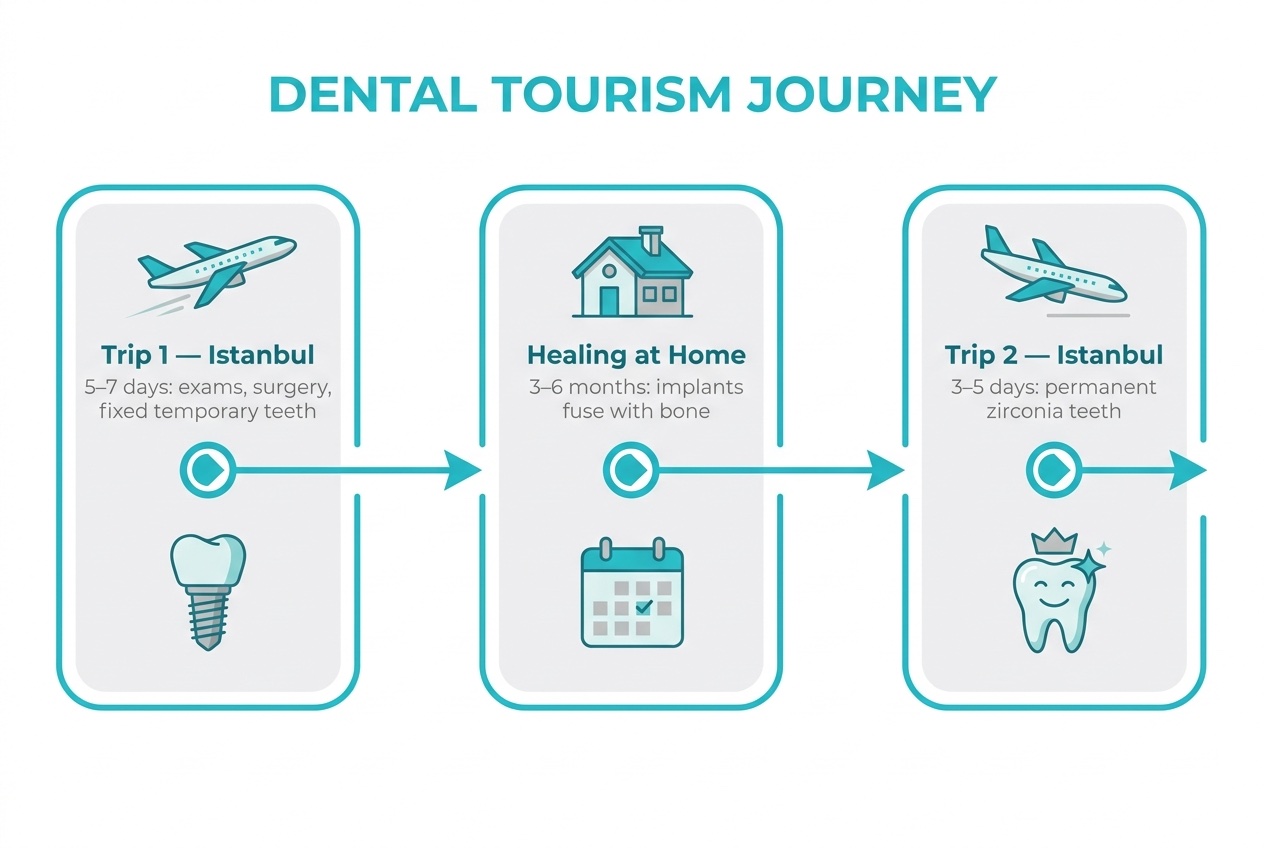
Step 3: First Istanbul Visit (5–7 Days)
CBCT scan and clinical examination on day one, followed by extractions and implant placement under local anaesthesia or non-opioid sedation. Temporary teeth are fitted where the protocol allows so you never leave without a smile. Most survivors fly home on day 6 or 7.
Step 4: Healing at Home (3–6 Months)
Osseointegration takes about 3 months in healthy bone and 4 to 6 months in irradiated bone. Your coordinator checks in with you, and we stay in contact with your local dentist if needed.
Step 5: Second Istanbul Visit (3–5 Days)
Impressions or digital scans, try-in and fitting of your final zirconia crowns or full-arch prosthesis, followed by bite adjustment and hygiene coaching for a dry mouth.
Step 6: Lifetime Aftercare
Annual reviews can be done remotely with your local dentist’s X-rays. We recommend professional cleanings every 3 to 4 months for survivors with dry mouth, because peri-implant tissues need extra protection when saliva is reduced.
Protecting Your Implants With a Dry Mouth After Radiation
Survivors with permanent xerostomia can keep implants for decades with the right routine:
- Brush twice daily with a soft brush and a high-fluoride toothpaste; use interdental brushes or a water flosser around implant abutments.
- Use saliva substitutes, sugar-free xylitol gum or lozenges, and sip water frequently.
- Wear custom fluoride trays if you still have natural teeth.
- Avoid alcohol-based mouthwashes, which dry tissues further; choose chlorhexidine or fluoride rinses as directed.
- Stop smoking completely; it multiplies both ORN and peri-implantitis risk.
- See a hygienist every 3 to 4 months and report any exposed bone, persistent pain or loosening immediately.
“A cancer survivor’s implant plan is written around three numbers: the date of the last treatment, the radiation dose to the jaw, and the latest blood count. Get those right and implants after cancer are as predictable as any other case.”
Frequently Asked Questions
Can you get dental implants after cancer treatment?
Yes. Most survivors can receive implants once active treatment has ended, their oncologist has cleared them for elective surgery and their blood counts have recovered. Chemotherapy alone does not significantly reduce long-term implant success. Radiation to the jaw requires extra planning because of reduced bone blood supply and osteoradionecrosis risk, but implants are placed successfully in irradiated jaws with the right protocol.
How long after chemo can I have dental work done?
Routine dental treatment is usually possible a few weeks after a chemotherapy cycle once white cell and platelet counts recover. For implant surgery, most clinicians wait 6 to 12 months after the final cycle and require written oncologist clearance plus a recent complete blood count.
Can I have dental implants after radiotherapy?
Usually yes, with precautions. Most protocols wait at least 12 months, review the radiation dose to the jaw, and use atraumatic surgery, antibiotic cover and longer healing. Above roughly 50 to 60 Gy at the implant site, hyperbaric oxygen or an alternative implant position may be recommended. Reported survival in irradiated bone is typically 85 to 95 percent versus 95 to 98 percent in non-irradiated bone.
What disqualifies you from dental implants after cancer?
Active treatment, existing osteoradionecrosis, current or recent IV bisphosphonate or denosumab therapy, very low blood counts, and radiation above 60 Gy at the implant site without a risk-reduction plan are the main reasons implants are postponed or declined. Smoking, uncontrolled diabetes and untreated gum disease also raise risk. Most of these are temporary or manageable.
Is it safe to get dental implants after cancer treatment?
For patients in remission who have been cleared by their oncologist, implant surgery is considered safe and often improves nutrition, speech and quality of life. Safety depends on disclosing your full history so the protocol can be adapted.
Does chemo make your teeth fall out?
Not directly. Chemotherapy causes dry mouth, mucositis, rapid decay and gum infection that can lead to tooth loss, particularly alongside radiation or steroids. Once treatment ends, the damage can be repaired with crowns, bridges or implants.
Do dental implants cause cancer?
No. Titanium and zirconia implants are biocompatible and have been used for decades with no evidence that they cause cancer. Rare reports of oral cancer near implants involve patients with pre-existing risk factors or previous oral cancer, which is why survivors of oral cancer receive regular soft-tissue checks after implant treatment.
How much do dental implants cost after cancer in Turkey?
At CLINIQUEPLUS single implants start from $250, All-on-4 from $4,670 per jaw and All-on-6 from $5,410 per jaw, with all-inclusive packages for full-arch treatment. US patients typically save 70 to 85 percent compared with home quotes, even after flights.
Does insurance cover dental implants after cancer treatment?
Sometimes partially. Some US medical plans cover medically necessary dental rehabilitation after head and neck cancer, and Medicare covers a narrow set of dental services linked to cancer care. Dental plans rarely cover implants. Provincial plans in Canada generally do not. Our coordinators can provide itemised invoices for any reimbursement claims.
Can a family member arrange or pay for my treatment?
Yes. Many survivors’ treatments are arranged by a spouse or adult child. Family members can contact us on your behalf, travel with you and even receive their own dental treatment during the same visit.
Take the Next Step — Free, Confidential Consultation
You have already done the hard part. Let us help you get your smile, your bite and your confidence back.
Send your treatment summary and a recent X-ray, and our English-speaking coordinators will reply within 24 hours with a personalised assessment, an oncology-aware protocol and a complete cost estimate. No deposit, no pressure, no obligation.
Candid answers. Careful planning. Completely confidential.
- 📍 Location: Kazlıçeşme, Kennedy Cad. Büyükyalı İstanbul Sitesi H Blok No:53, 34025 Zeytinburnu / Istanbul, Turkey
- 📞 WhatsApp / Phone: +90 542 160 30 30
- 🌐 Website: cliniqueplus.com
- ⭐ Rating: 4.9 / 5.0 from 100+ international patients
Disclaimer: This article is for informational purposes only and does not constitute medical advice. Suitability for dental implants after cancer treatment must be assessed individually by a qualified dental surgeon in coordination with your oncologist. Waiting periods, radiation thresholds and success rates quoted are typical ranges from published clinical literature and may not apply to your case. CLINIQUEPLUS recommends a full consultation and written oncologist clearance before any treatment decisions are made.