
Dental Implants After Drug Addiction: Full Guide
You made it through recovery. Now you’re staring at a smile that doesn’t reflect who you’ve become — and you want to fix it.
Dental damage from drug addiction is one of the most visible and lasting physical consequences of substance use. Meth mouth, opioid-related decay, cocaine-induced erosion, alcohol damage — the cause differs, but the result is often the same: missing teeth, crumbling enamel, bone loss, and a smile that reminds you of a life you’ve left behind.
The good news is that dental implants after drug addiction are not only possible — for most people in stable recovery, they are the gold standard solution. This guide covers everything you need to know: whether you’re a candidate, how long you need to wait, what the procedure involves, how to avoid opioid prescriptions, and why thousands of Americans in recovery are choosing Istanbul, Turkey for their smile restoration at a fraction of the US cost.
Can You Get Dental Implants After Drug Addiction?
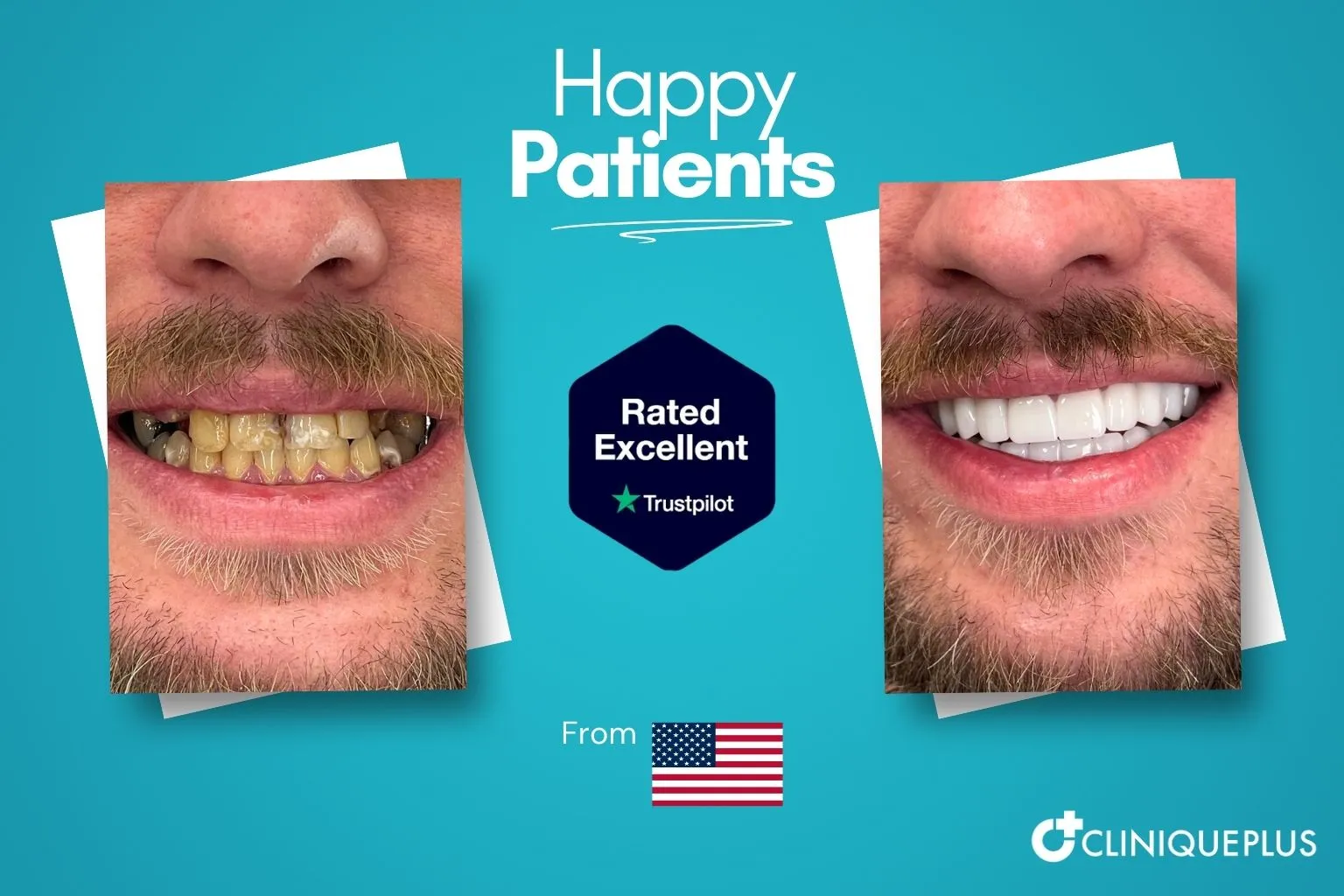
Yes — and this is the most important thing to understand from the outset. A history of drug addiction does not disqualify you from receiving dental implants. What matters is your current health status, not your past.
Dental implants work by fusing a titanium post into the jawbone through a biological process called osseointegration. The implant essentially becomes part of your bone, providing a permanent, stable anchor for a crown, bridge, or full arch prosthetic. For this fusion to succeed, your body needs to be in a state that supports normal healing and bone regeneration.
In active addiction, this is often not possible. Substances impair immune function, reduce saliva, damage gum tissue, and disrupt bone metabolism — all of which can cause implant failure. But in sustained recovery, these systems largely normalize. Studies consistently show that patients in stable recovery achieve implant success rates comparable to the general population.
The prerequisites for dental implants after drug addiction are:
- Sustained sobriety — a minimum of 3–6 months clean before implant placement, depending on substance history and overall health
- Controlled gum disease — active periodontitis must be treated before implants can be placed; untreated gum disease is the most common cause of implant failure
- Adequate jawbone — sufficient bone density for implant integration; if bone loss has occurred, grafting can rebuild the foundation
- Stable overall health — any systemic conditions affecting healing (liver damage, diabetes, cardiovascular issues from long-term use) need to be assessed and managed
- No active oral infection — abscesses and infections must be fully resolved before surgery
If these conditions are met, the pathway to a complete smile restoration is open — regardless of what substances you used, how long you used them, or how severe the damage appears.
How Drug Addiction Damages Teeth and Jawbone
Understanding the specific damage different substances cause helps set realistic expectations for the scope of treatment needed. The mechanisms differ by drug, but the end result — structural damage requiring implant-based reconstruction — is often the same.
Methamphetamine (Meth Mouth)
Methamphetamine causes the most severe and rapid dental destruction of any commonly abused substance. It combines dry mouth (xerostomia), extreme acidity, teeth grinding (bruxism), sugar cravings, and prolonged neglect into a pattern that destroys enamel and causes rampant decay within months. According to the American Dental Association, a study of 571 meth users found 96% had cavities and 31% had six or more missing teeth. Most advanced meth mouth cases require full arch implant reconstruction. For a detailed breakdown, see our guide on Meth Mouth Fix Turkey: Rebuild Your Smile After Recovery.
Opioids (Heroin, Prescription Painkillers)
Opioids reduce saliva production dramatically, leading to xerostomia and accelerated decay. Users often consume high-sugar foods and drinks to combat dry mouth. Opioid use also causes neglect of oral hygiene during periods of intoxication and withdrawal, and some users develop severe gum disease. The Rust Belt states — Ohio, Pennsylvania, West Virginia — have particularly high rates of opioid-related tooth loss.
Cocaine and Crack
Cocaine is highly acidic and when rubbed directly on the gums (a common practice), causes chemical burns and tissue erosion. Crack cocaine smoke is extremely acidic and damages enamel on contact. Cocaine also reduces blood flow to gum tissue, accelerating periodontal disease and in severe cases causing palate perforations and bone necrosis.
Alcohol
Long-term heavy alcohol use causes dry mouth, increases the acidity of saliva, contributes to vitamin deficiencies affecting bone density, and is associated with high rates of gum disease. Many alcoholics also have liver damage that affects blood clotting — an important consideration for implant surgery planning.
Marijuana
Regular marijuana use is associated with dry mouth and a statistically higher rate of periodontal disease. While the dental damage tends to be less catastrophic than meth or opioids, chronic marijuana users often present with significant gum disease requiring treatment before implants can be placed.
The Jawbone Consequence of Tooth Loss
Regardless of the substance, a critical consequence shared by all addiction-related tooth loss is jawbone resorption. When a tooth is lost, the jawbone beneath it immediately begins to shrink — losing approximately 25% of its width in the first year and continuing to deteriorate over time. This is why acting in recovery, rather than waiting indefinitely, preserves more bone and simplifies treatment. Bone grafting can rebuild what has been lost, but earlier intervention means less grafting is required.
How Long Do You Need to Be Sober Before Getting Dental Implants?
This is the question most people in recovery ask first — and the honest answer is that it depends on both the substance and your individual health status. There is no single universal number. What follows are general clinical guidelines, not a substitute for a personalized assessment.
General Sobriety Guidelines by Substance
| Substance | Minimum Sobriety Recommended | Why This Timeframe |
|---|---|---|
| Methamphetamine | 6–12 months | Severe bone quality issues; immune function takes time to recover; bruxism may persist |
| Opioids (heroin, prescription) | 3–6 months | Saliva production stabilizes; immune function recovers; pain response normalizes |
| Cocaine / Crack | 6 months minimum | Tissue damage must heal; vascular effects normalize; any structural damage assessed |
| Alcohol | 3–6 months | Liver function and clotting factors must normalize; bone density assessment needed |
| Marijuana | 1–3 months | Gum disease treated; dry mouth effects resolve; healing capacity assessed |
| Multiple substances | 6–12 months | Combined systemic effects require comprehensive evaluation |
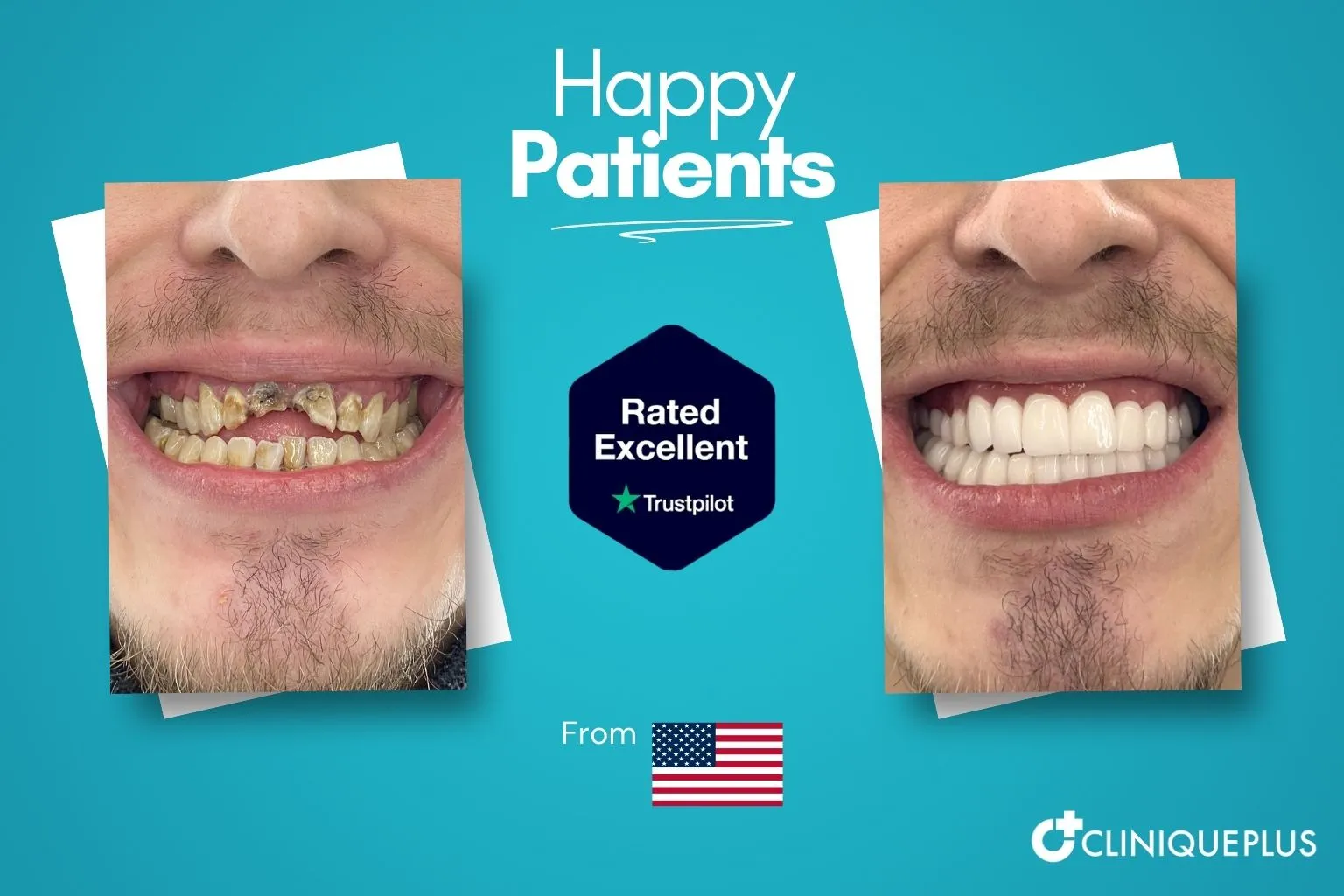
These are starting points, not absolute rules. Some patients in excellent health are ready sooner; others with significant systemic complications may need longer. The definitive answer comes from a clinical assessment that includes blood work, panoramic X-ray, and a full health history review — all of which CLINIQUEPLUS arranges as part of your free consultation process.
One thing is clear from research: waiting too long is also a problem. Every month without teeth means more jawbone loss. The sooner you begin the process — even if the actual implant surgery is months away — the better your long-term outcome.
Non-Opioid Pain Management: The Critical Question for People in Recovery
If there is one thing that keeps people in recovery from pursuing dental implants, it is this: fear of being prescribed opioids after surgery. This fear is not irrational — it is medically legitimate. For someone who has achieved sobriety from opioids or other substances, a post-surgical prescription for hydrocodone, oxycodone, or codeine represents a genuine clinical risk.
The good news is that modern dental implant surgery does not require opioid pain management — and at CLINIQUEPLUS, it never involves opioids unless the patient specifically requests otherwise.
What CLINIQUEPLUS Uses Instead
- Local anesthesia (lidocaine-based): The foundation of all dental procedures — highly effective, no addiction risk, wears off within hours of surgery
- IV sedation with non-opioid agents: For patients who want to be fully sedated during implant placement, we use benzodiazepine-based or propofol-based IV sedation — no opioid component
- NSAIDs post-operatively: Ibuprofen and acetaminophen are highly effective for post-implant pain and are the evidence-based first choice for dental post-operative pain management
- Corticosteroids: A short course of dexamethasone significantly reduces post-operative swelling and pain without any addiction risk
- Ice therapy and elevation: Simple measures that reduce the need for any medication at all in most implant cases
Research published in the Journal of the American Dental Association confirms that NSAIDs are equally effective to opioids for post-dental-procedure pain management in most patients. There is no clinical reason to use opioids for routine implant surgery pain.
Before your treatment, during your free consultation, please tell your CLINIQUEPLUS patient coordinator that you are in recovery. This is the single most important piece of information you can share. It will be documented in your treatment plan, and your entire anesthesia and post-operative protocol will be tailored accordingly. Your sobriety is treated with the same seriousness as a documented allergy.
“Your recovery is a medical fact that we design your entire care around. There is no scenario in which a patient in recovery at CLINIQUEPLUS will inadvertently be prescribed an opioid. We plan for it from the first conversation.”
Get a Free, Confidential Consultation
Tell us where you are in your recovery and what dental damage you’re dealing with. Our team will respond within 24 hours with a personalized treatment plan, non-opioid protocol details, and an all-inclusive cost estimate — no obligation, no judgment.
Treatment Options: From Single Implants to Full Arch Reconstruction
The appropriate implant solution depends on the extent of the damage. After a digital panoramic X-ray and clinical examination, your CLINIQUEPLUS dentist will recommend a treatment plan. Here are the most common options for patients in recovery:
Single Dental Implants
For patients who have lost individual teeth but retain healthy remaining teeth and bone, single titanium implants with zirconia crowns replace each missing tooth independently. Each implant acts as a permanent artificial root. At CLINIQUEPLUS, single implants start at $370 USD using Straumann, Implantswiss, Medentika, or Medigma systems. See our full pricing breakdown at Dental Implants in Turkey Price 2026: Complete Cost Guide & Package Deals.
All-on-4 Dental Implants
For patients who have lost most or all teeth in one jaw — the most common presentation in advanced addiction-related dental damage — the All-on-4 system anchors a full fixed arch of 12–14 prosthetic teeth on just four strategically placed titanium implants. It requires fewer implants, avoids bone grafts in most cases, and delivers a complete smile in a single visit to Istanbul. All-on-4 at CLINIQUEPLUS starts at $4,670 USD per jaw.
All-on-6 Dental Implants
The All-on-6 system uses six implants per jaw for additional stability and load distribution — recommended for patients with better bone volume or higher functional demands. All-on-6 starts at $5,410 USD per jaw at CLINIQUEPLUS.
Full Arch Reconstruction (Both Jaws)
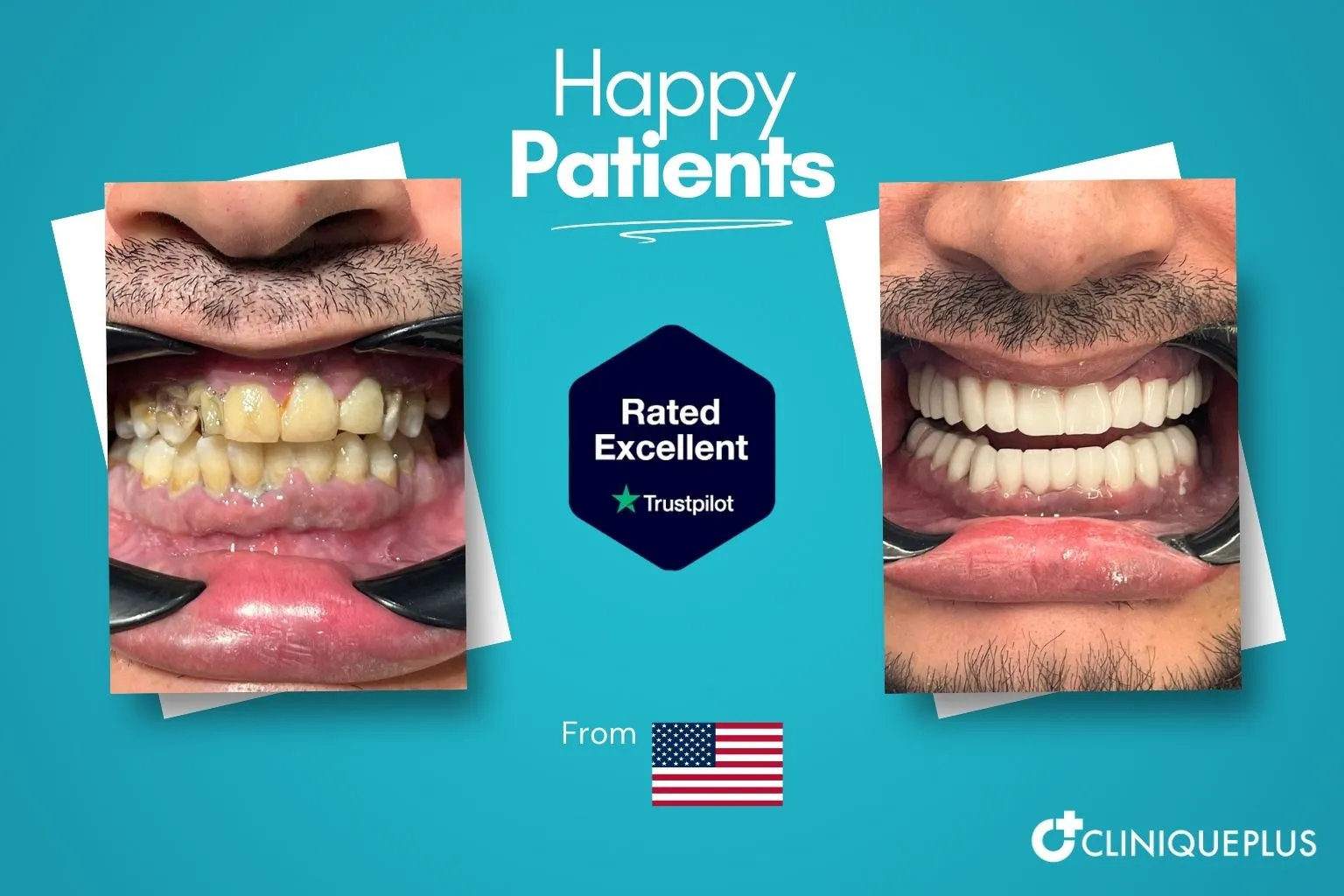
Many people seeking dental implants after drug addiction require complete upper and lower arch reconstruction. Both can be treated in a single Istanbul visit. All-on-4 both jaws from $7,960 USD; All-on-6 both jaws from $9,440 USD. Compare this to the $40,000–$80,000 equivalent in the United States.
Bone Grafting
If jawbone has been lost due to prolonged tooth loss or gum disease, bone grafting rebuilds the necessary foundation before implants can be placed. CLINIQUEPLUS performs bone grafting in-house. It is factored into your treatment plan from the initial X-ray assessment.
Hollywood Smile / Zirconia Veneers
For patients whose teeth are structurally damaged but not missing — heavily stained, chipped, or eroded by acid — zirconia veneers or a full Hollywood Smile package can restore aesthetics without implants. CLINIQUEPLUS’s all-inclusive 20-veneer Hollywood Smile package starts at $4,399 USD. See Veneers Turkey 2026: Complete Guide & Prices for full details.
Cost Comparison: Dental Implants After Addiction — USA vs Turkey
For most people in recovery, the cost of dental implants in the United States is the primary barrier. Dental insurance rarely covers implants — they are classified as cosmetic or elective by most insurers, leaving patients to bear the full cost out of pocket at a time when finances may already be strained from years of addiction and treatment costs.
| Treatment | USA Estimated Cost | CLINIQUEPLUS Turkey | Savings |
|---|---|---|---|
| Single Implant (with crown) | $3,000 – $5,000 | $370 | Up to 93% |
| All-on-4 (one jaw) | $20,000 – $30,000 | $4,670 | Up to 84% |
| All-on-6 (one jaw) | $25,000 – $35,000 | $5,410 | Up to 85% |
| All-on-4 (both jaws) | $40,000 – $60,000 | $7,960 | Up to 87% |
| All-on-6 (both jaws) | $50,000 – $70,000 | $9,440 | Up to 87% |
| 20 Zirconia Veneers | $20,000 – $30,000 | $4,399 (all-inclusive) | Up to 85% |
CLINIQUEPLUS Turkey prices include consultation, panoramic X-ray, procedure, temporary prosthetics, and medications. All-inclusive packages also include VIP airport transfers and 6 nights hotel with breakfast.
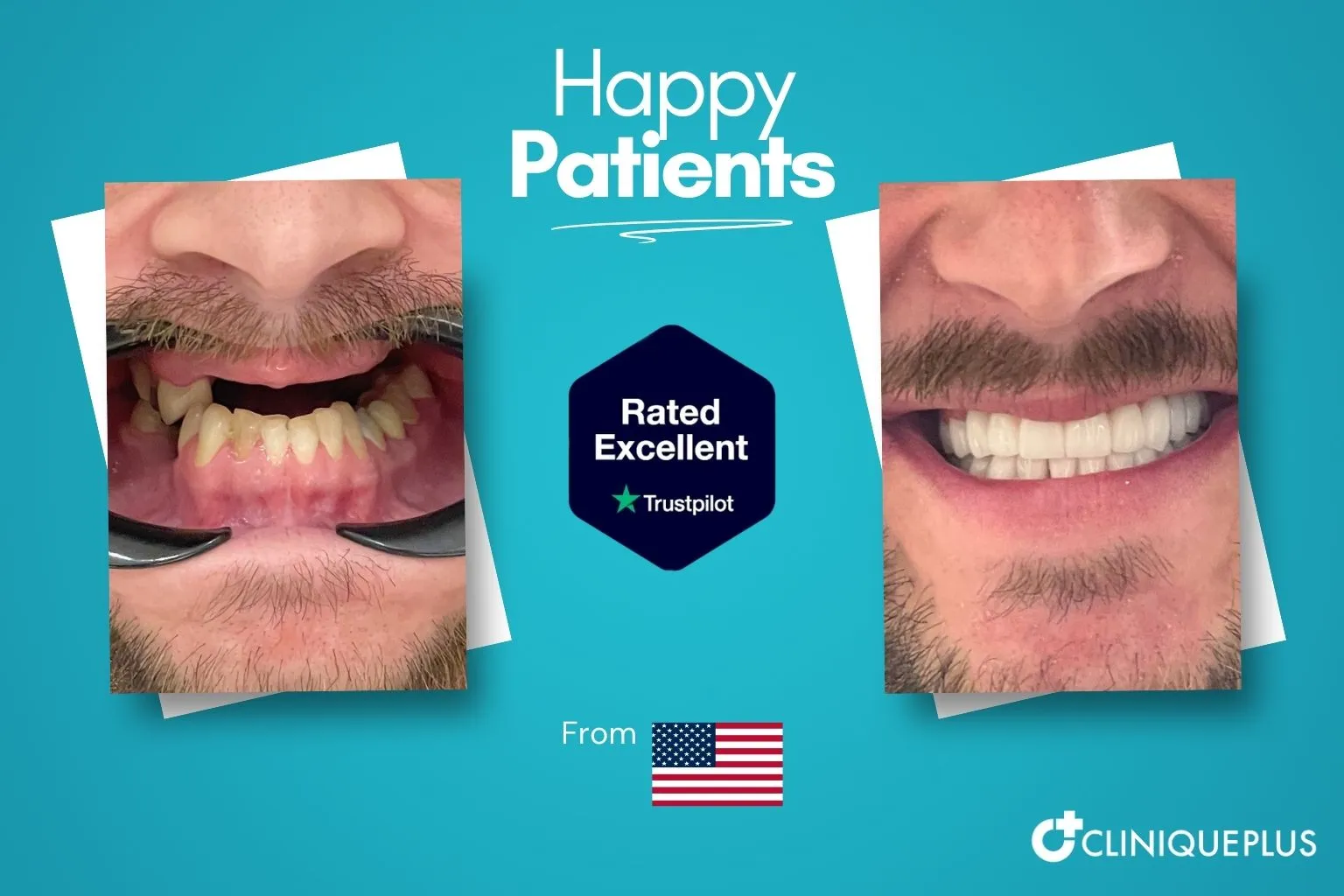
For a complete overview of the dental tourism experience and what to expect as an American patient, see our guide: Getting Teeth Done in Turkey 2026: Complete Cost & Safety Guide.
Why Choose Turkey for Dental Implants After Addiction?
Beyond cost, Istanbul offers a combination of advantages that are particularly meaningful for patients in recovery:
Privacy and a Fresh Start
For many people in recovery, traveling abroad for treatment offers something that local dental care cannot — complete privacy. You are not running into acquaintances in the waiting room. You are not explaining your history to a local provider who may know your family. Istanbul gives you the clinical care you need in an environment entirely separate from the social context of your recovery, which many patients find deeply liberating.
Non-Judgmental Clinical Culture
International health tourism clinics like CLINIQUEPLUS see patients from every background, every country, and every life history. The clinical culture is explicitly non-judgmental. Your dentist’s job is to rebuild your smile — your past is not their concern and never becomes part of the conversation unless it is medically relevant.
World-Class Implant Expertise
Istanbul’s top dental clinics perform more full-arch implant procedures annually than almost anywhere else in the world. This volume translates into extraordinary clinical expertise, particularly with complex cases involving bone loss, multiple extractions, and immediate loading — all of which are common in addiction-related full mouth reconstruction.
Speed of Treatment
In the United States, getting from initial consultation to implant placement often takes months of back-and-forth appointments. At CLINIQUEPLUS, the first visit to Istanbul covers consultation, X-rays, any extractions, implant placement, and fitting of temporary prosthetics — all within 5–7 days. You return home with a functional temporary smile while osseointegration proceeds over the following months.
Same Brands, Same Standards
CLINIQUEPLUS uses Straumann (Switzerland), Implantswiss, Medentika, and Medigma implant systems — the same premium brands used in the best US and European clinics. The implants carry the same manufacturers’ warranties. The cost difference is not a materials or standards difference — it is an operating cost and exchange rate difference.
What to Expect: The Step-by-Step Process
Step 1: Free Online Consultation
Everything begins with a no-obligation consultation — by video, WhatsApp, or email. Share your situation, any existing X-rays or photos, and your recovery status. A CLINIQUEPLUS patient coordinator — not a salesperson — will respond within 24 hours with a preliminary assessment and cost estimate. No deposit. No commitment.
Step 2: Pre-Treatment Assessment
Once you decide to proceed, we request a recent blood panel and any existing dental records. We confirm your non-opioid protocol in writing. We arrange your Istanbul travel dates and hotel. All logistics are handled by your dedicated coordinator.
Step 3: First Istanbul Visit (5–7 Days)
Your VIP transfer driver meets you at Istanbul Airport. Day 1: full clinical examination, 3D panoramic X-ray, treatment plan finalization. Days 2–5: treatment — extractions of any remaining unsalvageable teeth, any bone grafting if required, implant placement, and fitting of your temporary prosthetic teeth. You leave Istanbul with a functional, natural-looking temporary smile.
Step 4: Healing Period at Home (3–6 Months)
You return to your recovery life. The implants undergo osseointegration — permanently integrating with your jawbone. Your CLINIQUEPLUS coordinator stays available on WhatsApp throughout. Your local dentist or recovery support team can be included in care coordination if you wish.
Step 5: Second Istanbul Visit (3–5 Days)
You return to Istanbul for placement of your final permanent zirconia or porcelain crowns. Adjustments are made until bite, fit, and aesthetics are perfect. You leave with your complete, permanent, final smile.
Step 6: Lifetime Aftercare
CLINIQUEPLUS provides warranty on Straumann implants. Online follow-up consultations are available indefinitely. Annual check-up visits can be combined with a return trip to Istanbul at your convenience.
The Evidence: Dental Restoration and Recovery Outcomes
Dental implants after drug addiction are not just an aesthetic choice — the research suggests they are a meaningful contributor to long-term recovery success.
A program run through the University of Utah, called FLOSS, provided dental treatment — including implants, extractions, and restorations — to people in addiction rehabilitation. The results were striking: participants who received dental care were 80% more likely to complete their addiction treatment program than those who did not. After completing the program, former addicts who participated were more likely to have stable jobs and stable housing.
The researchers’ hypothesis for why dental care improved recovery outcomes centers on confidence and self-image. When the visible physical evidence of addiction is removed from someone’s face, the psychological barrier to reintegration — the constant reminder every time they look in a mirror or smile — is also removed. Dental restoration changes not just how others perceive a person in recovery, but how they perceive themselves.
This is not a trivial finding. It suggests that dental implants after drug addiction are not a luxury or a vanity project. They are, for many people, a genuine clinical component of recovery.
The CLINIQUEPLUS Approach: Recovery-Sensitive Care in Istanbul
CLINIQUEPLUS is an internationally trusted dental health tourism agency based in Istanbul, holding a 4.9-star Trustpilot rating from over 100 verified international patient reviews. We have treated many patients from the United States and Canada who came to us in recovery from addiction — and we have developed a specific understanding of what those patients need that goes beyond clinical dentistry.
When you work with CLINIQUEPLUS as a patient in recovery, you can expect:
- No judgment, ever. Your history is medically relevant in specific ways — we need to know about substance history to plan your anesthesia safely. Beyond that, it is simply not our business.
- Documented non-opioid protocols. Your entire pain management plan is written into your treatment record before you arrive. There is no ambiguity, no last-minute decisions, no risk.
- Privacy as a default. Your patient records are handled under GDPR-compliant confidentiality. Nothing leaves the clinic without your consent.
- A dedicated coordinator throughout. One English-speaking coordinator manages your entire experience — from the first message to your final crown placement — so you never feel lost or alone in an unfamiliar healthcare system.
- Premium materials, always. Straumann and other internationally certified implant brands only. Never economy-tier systems.
What’s Included in the All-Inclusive Package
- ✅ VIP airport pickup and all clinic transfers
- ✅ 6 nights 4-star Istanbul hotel (breakfast included)
- ✅ Digital panoramic X-ray and 3D imaging
- ✅ Full clinical examination and treatment planning
- ✅ All surgical procedures and prosthetics
- ✅ Temporary teeth fitted before departure
- ✅ Post-operative medications and mouth guard
- ✅ Non-opioid pain management protocol (documented)
- ✅ Dedicated English-speaking patient coordinator
- ✅ Straumann / premium brand implants
Frequently Asked Questions
Can you get dental implants after drug addiction?
Yes. A history of drug addiction does not disqualify you from dental implants. What matters is your current health status: a period of sustained sobriety, controlled gum disease, adequate jawbone, and overall health stable enough for surgery. Most people in stable recovery are excellent candidates.
How long do you need to be sober before getting dental implants?
Generally 3–6 months for most substances, with 6–12 months recommended for methamphetamine use due to more significant bone and tissue effects. The definitive answer depends on your individual health, which a free CLINIQUEPLUS consultation will assess. Earlier is generally better for preserving jawbone — don’t wait longer than you have to.
Will I be given opioids for pain after implant surgery?
Not at CLINIQUEPLUS. We use non-opioid pain management: local anesthesia, non-opioid IV sedation options, and post-operative NSAIDs (ibuprofen, acetaminophen). This is documented in your treatment plan before you arrive. Please disclose your recovery status at consultation.
How much does it cost to get dental implants after addiction in Turkey?
Single implants start at $370 at CLINIQUEPLUS. All-on-4 full arch starts at $4,670 per jaw. All-on-4 both jaws starts at $7,960. Compare to $20,000–$60,000 for the equivalent in the United States. All-inclusive packages with hotel and transfers are available.
What if I need bone grafting because of long-term tooth loss?
Bone grafting is performed in-house at CLINIQUEPLUS and is a standard part of treatment planning for patients with significant tooth loss history. It is assessed from your initial X-rays and incorporated into your treatment plan and cost estimate from the start.
Can my family pay for my treatment?
Yes. Many of our patients’ treatments are funded by parents, spouses, or other family members as a recovery milestone. Our coordinators are experienced in handling all payment arrangements for international patients. The total cost — including flights from the US and all treatment — is typically still far below what a single jaw would cost in America.
Is Turkey safe for dental treatment?
Yes. Turkey’s leading dental clinics operate to European accreditation standards, use internationally certified implant brands, and are staffed by specialists with international training. In 2025, Turkey welcomed over 2 million medical tourists. CLINIQUEPLUS holds a 4.9-star Trustpilot rating from 100+ verified international patients.
Does getting dental implants help with recovery?
Research suggests yes. A University of Utah study found that recovering addicts who received dental care were 80% more likely to complete their treatment program — and were more likely to have stable jobs and housing afterward. Smile restoration removes one of the most visible reminders of addiction, which many people in recovery report as deeply significant for self-confidence and social reintegration.
Take the Next Step — Free, Confidential Consultation
You’ve rebuilt your life. Let us help you rebuild your smile.
Our English-speaking patient coordinators will respond within 24 hours with a personalized assessment, confirmed non-opioid protocol, and a complete cost estimate. There is no deposit, no pressure, and no obligation.
No judgment. No pressure. Completely confidential.
- 📍 Location: Kazlıçeşme, Kennedy Cad. Büyükyalı İstanbul Sitesi H Blok No:53, 34025 Zeytinburnu / Istanbul, Turkey
- 📞 WhatsApp / Phone: +90 542 160 30 30
- 🌐 Website: cliniqueplus.com
- ⭐ Rating: 4.9 / 5.0 from 100+ international patients
Disclaimer: This article is for informational purposes only and does not constitute medical advice. Individual suitability for dental implants must be assessed by a qualified clinician. CLINIQUEPLUS recommends a full consultation before any treatment decisions are made. If you or someone you love is struggling with addiction, please contact SAMHSA’s National Helpline at 1-800-662-4357 for free, confidential support.